
Running costs, records and planning
Understand what your EV or hybrid really costs to run, and why records matter.
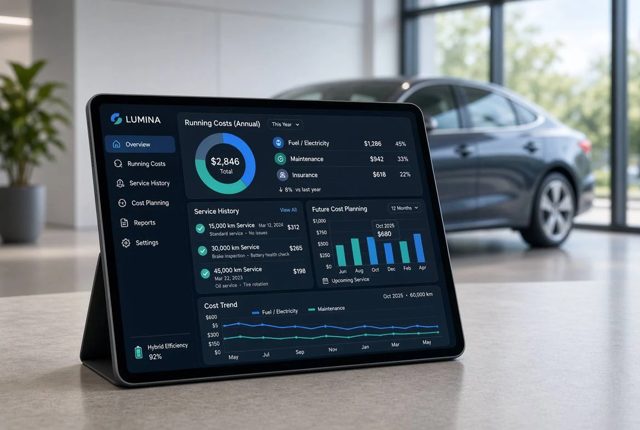
Buying an EV or hybrid is only the beginning of your vehicle ownership journey.
Like any vehicle, it comes with ongoing expenses. However, the way these costs are structured can be quite different from what many conventional petrol vehicle owners are used to.
Understanding your running costs, planning for maintenance and keeping accurate vehicle records can help you make smarter financial decisions and get more value from your investment.
Whether you already own an EV or hybrid or are considering purchasing one in Ghana, here's what you should know.
1. Understand the main costs of ownership
The total cost of owning a vehicle goes beyond its purchase price. For EV and hybrid owners, important expenses include:
Charging or fuel
Fully electric vehicles rely on electricity, while hybrids use a combination of electricity and petrol. Your actual energy costs will depend on how frequently you drive, your vehicle's energy consumption, electricity tariffs and charging arrangements, whether you charge at home or use public charging stations, and your driving habits.
For hybrid vehicles, remember to include petrol expenses alongside electricity costs where applicable.
Maintenance and servicing
EVs generally have fewer routine mechanical servicing requirements than conventional petrol vehicles. They do not require conventional engine oil changes, spark plugs or exhaust system maintenance.
However, they still require inspections and maintenance involving tyres, brakes, suspension, cooling systems, air conditioning, auxiliary batteries and electrical systems. Hybrids also require appropriate combustion-engine servicing.
Insurance
Insurance is an important part of vehicle ownership. Premiums can vary depending on the vehicle's value, model, age, coverage and insurer. Before purchasing an EV or hybrid, confirm what coverage is available and whether the policy adequately addresses the vehicle's battery and specialised components.
Repairs and replacement parts
EV and hybrid components can require specialised expertise. Depending on the vehicle, replacement parts may need to be sourced through specific suppliers or imported. It is sensible to understand the availability and potential cost of important components before buying a vehicle.
Other ownership expenses
Remember to account for vehicle registration and applicable statutory charges, parking, tyre replacement, vehicle cleaning and detailing, roadside assistance, periodic inspections and financing costs, where applicable.
2. How do EV and hybrid running costs compare?
Electric vehicles
EVs can offer lower routine energy and maintenance expenses, particularly when owners have convenient access to reasonably priced charging. They do not require conventional engine oil changes, spark plugs or exhaust system maintenance. However, tyre wear, battery-related inspections, cooling systems and other components still require attention.
Hybrid vehicles
Hybrids can reduce petrol consumption by using electric power during certain driving conditions. They can be particularly useful for drivers who want improved fuel efficiency without depending entirely on public charging infrastructure. However, they still require engine servicing and fuel purchases.
Which is cheaper?
There is no universal answer. The most economical option depends on your vehicle, driving distance, energy prices, maintenance needs and charging arrangements. Consider your actual driving habits rather than relying only on advertised efficiency figures.
3. Understand your vehicle's energy consumption
Monitoring energy consumption helps you understand how efficiently your vehicle operates. For EVs, energy consumption is commonly measured in kilowatt-hours per 100 kilometres (kWh/100 km). For hybrids, fuel consumption is often measured in litres per 100 kilometres (L/100 km), although some models also display electric energy consumption.
Pay attention to your average energy consumption, distance travelled, charging frequency, petrol consumption for hybrids, and changes in efficiency over time.
Air conditioning, traffic, tyre pressure, driving speed and road conditions can all influence consumption. Tracking these figures can help you identify changes in your vehicle's performance and estimate your actual running expenses.
4. Keep track of your maintenance and service history
One of the most useful habits you can develop as a vehicle owner is keeping accurate maintenance records. Your records should include service dates, mileage at each service, parts replaced, battery inspections, diagnostic reports, repairs carried out, software updates, tyre replacements, brake servicing and charging-related maintenance.
These records help you understand what has been done to your vehicle and when future maintenance may be required. They can also be useful when selling the vehicle, making warranty claims or discussing recurring problems with a technician.
5. Keep important vehicle documents organised
Your vehicle's documents are just as important as its maintenance history. Keep accessible copies of vehicle registration documents, insurance documents, purchase and ownership records, manufacturer warranty information, battery warranty information, service invoices, diagnostic reports, user manuals and charging equipment documentation.
Where possible, maintain both digital and physical copies. Digital records can be especially useful because they are easier to retrieve, update and share when dealing with service centres or other relevant providers.
6. Plan ahead for major expenses
Unexpected repairs can put pressure on your finances. A simple ownership budget can help you prepare for expenses before they arise.
Consider setting aside money for routine servicing, tyre replacement, brake maintenance, insurance renewal, unexpected repairs, auxiliary battery replacement and charging equipment maintenance.
For EV and hybrid owners, it is also worth understanding your manufacturer's warranty coverage, particularly for the high-voltage battery. Check the applicable mileage and time limits, exclusions and conditions. Do not assume that every battery problem or repair is automatically covered by warranty.
7. Calculate your actual cost per kilometre
One useful way to understand vehicle running expenses is to calculate how much it costs to travel each kilometre.
EV energy cost example
If your vehicle uses 18 kWh per 100 km and your electricity costs GHS 2.00 per kWh:
18 × GHS 2.00 = GHS 36 per 100 km. That gives an estimated energy cost of GHS 0.36 per kilometre.
This is an illustration, not a current Ghana electricity tariff or a guaranteed vehicle consumption figure. Your actual cost will depend on the charging tariff, charging losses and driving conditions.
For hybrids, calculate fuel and electricity expenses separately, then combine them to estimate your total energy cost. This makes it easier to compare different vehicles and understand how your driving habits affect your budget.
8. Research running costs before buying
If you are considering purchasing an EV or hybrid, research more than the purchase price. Before making a decision, investigate:
- Availability of compatible charging stations.
- Access to qualified service centres.
- Availability of replacement parts.
- Insurance options.
- Battery warranty coverage.
- Expected energy consumption.
- Common maintenance requirements.
- Availability of roadside assistance.
In Ghana, the availability of reliable technical support and replacement parts can be particularly important when choosing a vehicle. A vehicle that appears affordable initially may become expensive to maintain if the necessary expertise or parts are difficult to access.
9. A simple monthly ownership review
Set aside a few minutes each month to review your vehicle's condition and expenses.
Vehicle performance
- Review average energy consumption.
- Check for unusual changes in driving range.
- Review dashboard warnings.
- Monitor charging or fuel usage.
Financial records
- Record charging and fuel expenses.
- Record maintenance and repair expenses.
- Review insurance and other upcoming payments.
- Update your vehicle ownership budget.
Maintenance
- Check your service reminders.
- Review outstanding repairs.
- Keep receipts and service records.
- Plan upcoming inspections.
Final thoughts
Owning an EV or hybrid can be a rewarding experience, but getting the most from your investment requires more than simply driving and charging your vehicle.
Understanding running costs, maintaining accurate records and planning for future expenses can help you become a more informed and confident vehicle owner.
As Ghana's electric mobility ecosystem develops, access to reliable information, specialised services and trusted service providers will play an increasingly important role in the ownership experience.
NexaFix is working to bring these essential resources and connections together, making it easier to manage your vehicle and navigate the world of electric and hybrid mobility.