
New to EVs? Start here.
A beginner's guide to electric vehicles: how they work, how to charge and whether one suits you.
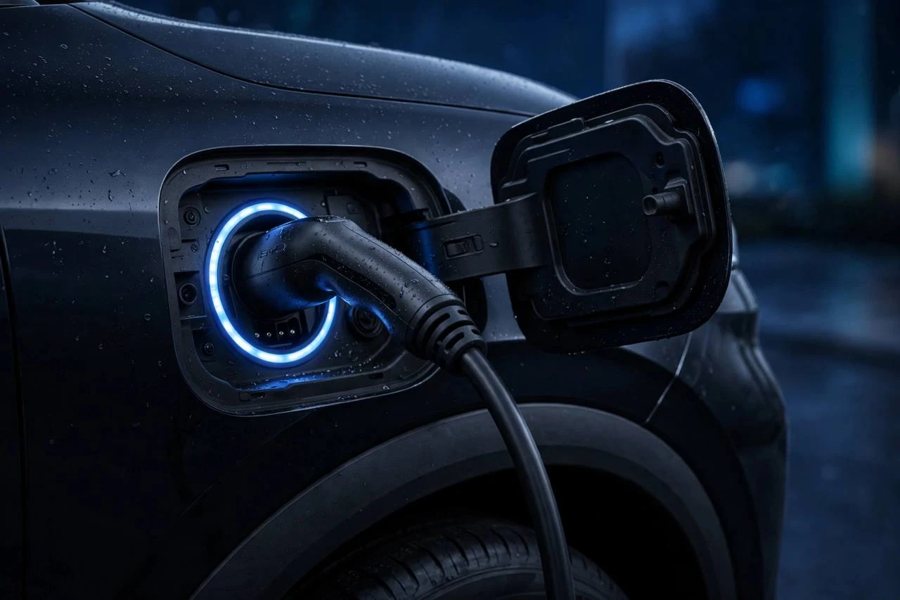
Electric vehicles are changing the way people think about transportation. From reduced dependence on petrol to quieter driving experiences and smarter vehicle technology, EVs are becoming an increasingly attractive option for drivers around the world.
But if you're new to electric vehicles, you probably have a few questions. How do they work? Where do you charge them? How far can they travel? And are they practical for everyday driving in Ghana?
Let's start with the basics.
What exactly is an electric vehicle?
An Electric Vehicle (EV) is a vehicle that uses electricity to power an electric motor instead of relying on a conventional petrol or diesel engine.
The electricity is stored in a rechargeable battery pack, which supplies energy to the motor whenever the vehicle is driven.
Unlike conventional vehicles, fully electric vehicles do not require petrol or diesel to operate and produce no exhaust emissions while driving.
How does an EV work?
The process is relatively simple:
- Charging: electricity is transferred into the vehicle's battery through a compatible charging point.
- Energy storage: the battery stores electrical energy for driving.
- Power delivery: when you accelerate, the battery supplies electricity to the electric motor.
- Movement: the electric motor converts electrical energy into mechanical power, turning the wheels.
- Energy recovery: during deceleration, regenerative braking can recover some energy and return it to the battery.
This technology allows EVs to deliver smooth acceleration, quiet operation and efficient energy use.
What makes electric vehicles different?
- No petrol engine: a fully electric vehicle uses an electric motor rather than an internal combustion engine.
- Charging instead of refuelling: you recharge the battery using compatible charging equipment.
- Regenerative braking: the vehicle can recover some energy when slowing down.
- Fewer routine mechanical components: EVs generally have fewer moving powertrain parts and do not require conventional engine oil changes.
- Quiet driving: electric motors operate with significantly less noise than conventional engines.
Understanding the main components
- Battery pack: stores the energy used to drive the vehicle.
- Electric motor: converts electrical energy into movement.
- Charging port: connects the vehicle to an external charging source.
- Onboard charger: converts incoming AC electricity into the DC electricity required by the battery.
- Battery management system: monitors and manages battery operation.
- Regenerative braking system: recovers some energy during deceleration.
How do you charge an electric vehicle?
EVs can be charged using different types of charging equipment.
Home charging: owners can install compatible charging equipment at home, making overnight charging convenient.
Public charging: charging stations provide access to electricity at selected public locations.
AC charging: commonly used for home, workplace and destination charging. It is generally slower.
DC fast charging: provides higher charging power and is useful when you need to recharge more quickly.
Charging time depends on the battery capacity, vehicle charging limits, charger power and battery temperature.
Before charging, always confirm that the connector and charging standard are compatible with your vehicle.
How far can an electric vehicle travel?
The distance an EV can travel on a full battery is known as its driving range.
Different vehicles offer different ranges depending on their battery capacity, efficiency and design. However, the advertised range is not always the same as the distance you will achieve in everyday driving.
Factors that influence range include:
- Driving speed and acceleration.
- Air-conditioning use.
- Traffic conditions.
- Road gradients and surface conditions.
- Tyre pressure.
- Vehicle load.
- Battery temperature and condition.
For drivers in Ghana, understanding your daily travel requirements and available charging options is particularly important.
Are electric vehicles suitable for Ghana?
EV ownership in Ghana presents exciting opportunities, but it also requires proper planning.
Before purchasing, consider:
- Where you will charge your vehicle.
- Whether your home or workplace can support safe charging.
- Whether public charging options are available along your regular routes.
- Whether the vehicle uses charging standards supported by available infrastructure.
- Whether qualified EV technicians can service the vehicle.
- Whether compatible spare parts and technical support are accessible.
The right vehicle is not necessarily the one with the biggest battery or longest advertised range. It is the one that fits your everyday needs.
Is an electric vehicle right for you?
An EV may be a suitable choice if:
- You have access to convenient and reliable charging.
- Most of your journeys are predictable.
- You want to reduce dependence on petrol or diesel.
- You are comfortable learning new vehicle technology.
- You have access to suitable maintenance and technical support.
If you frequently travel long distances or have limited access to charging, you may also want to explore hybrid options.
Final thoughts
Getting started with electric vehicles does not have to be complicated.
Once you understand how they work, how to charge them and what to consider before purchasing, you can make more informed decisions about your next vehicle.
As electric mobility continues to develop in Ghana, access to reliable information, charging infrastructure, technical expertise and essential services will become increasingly important.
That's where NexaFix comes in. We're connecting EV and hybrid owners with the resources, services, expertise and support they need to make vehicle ownership easier, smarter and more convenient.