
Keeping your battery healthy
Simple habits that help your main battery and 12V battery last.
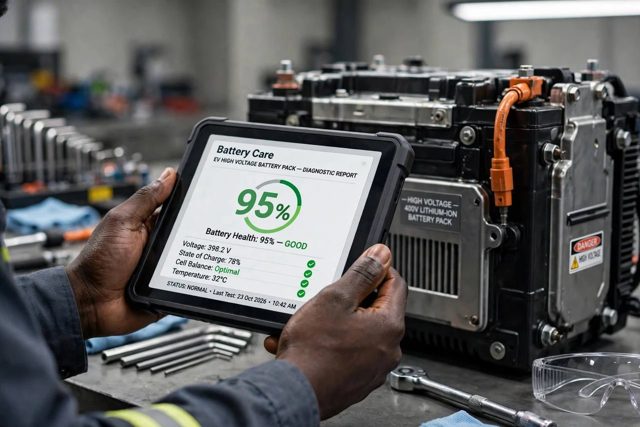
The battery is one of the most important components of an electric or hybrid vehicle. It stores the energy that powers your vehicle, supports its performance and plays a major role in determining how efficiently it operates.
Unlike conventional petrol vehicles, EVs and hybrids rely on sophisticated battery systems that require specific care and attention.
The good news is that maintaining your battery doesn't have to be complicated. A few consistent habits can help preserve battery performance, reduce unnecessary wear and keep your vehicle running reliably.
Here's what every EV and hybrid owner should know.
1. Understand the two types of batteries
Many EV and hybrid owners are surprised to discover that their vehicles have more than one battery.
The high-voltage battery
This is the main battery responsible for powering the electric motor. In fully electric vehicles, it provides the energy needed for driving. In hybrids, it works alongside the combustion engine to support electric driving and improve fuel efficiency.
The 12V battery
Most EVs and hybrids also have a smaller auxiliary battery, commonly a 12V battery. It powers or supports essential electrical systems such as vehicle electronics, lighting, control modules and vehicle start-up functions.
Even when the main battery has sufficient charge, a weak 12V battery can prevent the vehicle from starting or operating normally.
Both batteries deserve attention.
2. Develop healthy charging habits
How you charge your EV can influence long-term battery performance. Consider these habits:
- Follow your vehicle manufacturer's recommended charging practices.
- Avoid regularly leaving the battery at a very low charge level for extended periods.
- Avoid keeping the battery at 100% for prolonged periods unless your manufacturer recommends it for your particular vehicle or journey.
- Use compatible, properly installed charging equipment.
- Avoid unnecessary frequent DC fast charging when slower AC charging is convenient, while recognising that occasional fast charging is generally part of normal EV use.
- Follow the manufacturer's recommended charge limits and settings.
Remember, battery recommendations differ between vehicle models and battery chemistries. Always consult your owner's manual.
3. Be mindful of extreme temperatures
Battery systems perform best when operated within their designed temperature ranges. High temperatures can increase battery stress, while very low temperatures can temporarily reduce available performance and charging efficiency.
In Ghana's generally warm climate, pay attention to:
- Parking in shaded areas where practical.
- Avoiding unnecessary exposure to intense heat.
- Keeping battery cooling systems properly maintained.
- Responding to battery temperature warnings.
- Avoiding charging when the vehicle displays a temperature-related warning until the manufacturer's instructions have been followed.
Modern EVs and hybrids have battery management systems designed to regulate battery conditions, but these systems still require proper maintenance.
4. Pay attention to your 12V battery
The 12V battery is often overlooked because owners focus primarily on the larger traction battery. However, a weak auxiliary battery can cause unexpected electrical problems.
Possible warning signs include:
- Difficulty powering up the vehicle.
- Unusual dashboard warning messages.
- Electrical systems behaving inconsistently.
- Repeated 12V battery warnings.
- The vehicle failing to enter its ready-to-drive mode.
Have the auxiliary battery inspected according to your manufacturer's maintenance schedule, especially if your vehicle has been unused for extended periods.
Do not assume every electrical warning is caused by the 12V battery. Proper diagnosis is important.
5. Avoid leaving your vehicle unused for too long
If you plan to leave your EV or hybrid parked for several days or weeks, take the necessary precautions.
- Follow the manufacturer's recommended storage charge level.
- Park in a safe, well-ventilated and preferably shaded location.
- Check whether the vehicle requires periodic charging.
- Avoid leaving the battery fully depleted.
- Ensure the 12V battery is not unnecessarily drained by accessories or systems left running.
Some vehicles have specific long-term storage procedures, so consult your owner's manual before leaving the vehicle unused.
6. Monitor battery performance
Pay attention to changes in your vehicle's performance and energy consumption. Useful indicators include:
- Changes in estimated driving range.
- Unusual battery discharge.
- Unexpected charging interruptions.
- Battery temperature warnings.
- Changes in charging behaviour.
- Battery-related dashboard alerts.
Remember that a reduction in estimated range does not automatically mean your battery is damaged. Driving conditions, air conditioning, tyre pressure and other factors can influence range.
If you notice persistent or unexplained changes, arrange a professional battery assessment.
7. Schedule professional battery checks
Your vehicle's battery management system monitors important battery parameters, but professional inspections can help identify issues that may not be obvious to the driver.
A qualified EV or hybrid technician can assess:
- Battery health and State of Health (SOH), where supported.
- Battery management system information.
- Battery temperature and cooling performance.
- Relevant diagnostic fault codes.
- 12V battery condition.
- Charging system performance.
- Signs of physical damage or abnormal operation.
Never attempt to open, repair or disconnect a high-voltage battery yourself. These systems can be extremely dangerous even when the vehicle is switched off.
A simple battery care routine
Every week
- Pay attention to battery warnings.
- Monitor unusual changes in energy consumption.
- Follow appropriate charging habits.
Every month
- Check for visible damage around the charging port and accessible cables.
- Review any battery-related alerts.
- Observe changes in driving range and charging behaviour.
During scheduled servicing
- Request an appropriate battery system inspection.
- Have the 12V battery checked.
- Review diagnostic information and battery cooling performance.
Final thoughts
Your EV or hybrid battery is designed to serve you for many years, but proper care and maintenance remain important.
Healthy charging habits, attention to temperature, regular inspections and early response to warning signs can help you get the most from your vehicle.
As electric mobility continues to grow in Ghana, understanding how to care for your vehicle's battery is an essential part of becoming a confident and informed EV or hybrid owner.