
What to do if your EV stops unexpectedly
Simple steps to stay safe and get back on the road.
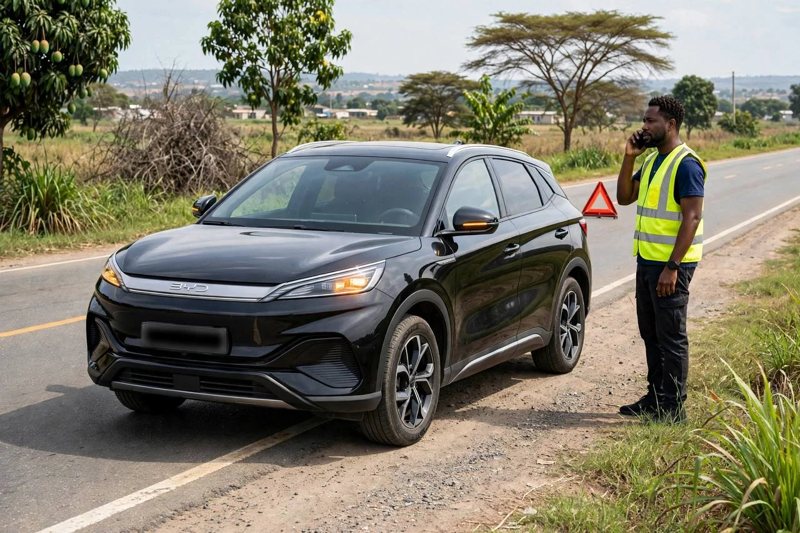
An unexpected vehicle stoppage can be stressful, particularly when driving an electric vehicle for the first time.
Whether your EV suddenly loses power, refuses to enter driving mode or stops responding while on the road, knowing what to do can make a significant difference.
Although modern electric vehicles are designed with several safety and protection systems, unexpected problems can still occur.
The important thing is to stay calm, protect yourself and understand the safest next steps.
1. Move to safety first
Your safety should always come before diagnosing the vehicle. If your EV stops while moving:
- Activate your hazard warning lights if they are working.
- If the vehicle can still move safely, guide it away from traffic.
- Avoid stopping in the middle of the road where possible.
- Apply the parking brake once safely stationary.
- If you are on a busy road, stay aware of surrounding traffic.
- If the vehicle is in a dangerous position, move yourself and passengers to a safe location when possible.
On a busy road, do not stand directly behind or in front of the vehicle.
If there is smoke, fire, unusual heat or signs of battery damage, move away from the vehicle and contact emergency services. Do not attempt to inspect or handle the high-voltage battery.
2. Identify what happened
Not every unexpected stoppage means the battery is damaged. Your vehicle may stop or refuse to move for several reasons.
Low battery charge
The main battery may have reached a critically low charge level. Some vehicles provide warnings before reaching this point, but available range can change depending on driving conditions.
12V battery failure
A weak or faulty auxiliary battery can prevent the vehicle from powering up correctly, even when the main battery still has sufficient charge.
Electrical or electronic system fault
A fault involving sensors, control modules or other electronic components may prevent the vehicle from entering its ready-to-drive mode.
Battery or powertrain protection
The vehicle may limit power or stop operating normally when its monitoring systems detect a condition that requires protection.
Overheating
A problem involving battery cooling, electric motor cooling or power electronics may cause the vehicle to reduce performance or display a serious warning.
Charging-related issue
If your vehicle stops responding after charging or refuses to enter driving mode, there may be an issue involving the charging connection or charging system.
3. Check your dashboard messages
Once safely stationary, pay attention to what the vehicle is communicating. Look for battery charge warnings, high-voltage system alerts, 12V battery warnings, powertrain fault messages, temperature warnings, charging connection messages and instructions to stop or seek service.
Take a photograph of the dashboard message if it is safe to do so. This information can help a technician understand what happened.
Never ignore a STOP message or serious battery, brake or overheating warning.
4. Carry out only safe basic checks
If there are no signs of smoke, fire, overheating, battery damage or other serious hazards, you can carry out a few basic observations:
- Check whether the displayed battery charge is critically low.
- Confirm whether the charging cable is still connected.
- Check whether the vehicle indicates that it is in Park.
- Look for obvious external obstructions.
- Check whether the dashboard displays a specific instruction.
If the vehicle appears to be in a charging mode, follow the manufacturer's instructions for safely ending the charging session before attempting to drive.
Do not disconnect high-voltage cables, open battery compartments or attempt electrical repairs. If the vehicle still does not respond, stop troubleshooting and arrange professional assistance.
5. When should you request roadside assistance?
Contact roadside assistance if your vehicle cannot enter driving mode, has completely lost power, displays a serious battery or electrical warning, may have a high-voltage system fault, cannot be moved safely, has visible damage or a suspected battery problem, or you are uncertain whether it is safe to drive.
When requesting assistance, provide your exact location, vehicle make and model, a description of what happened, any dashboard warnings displayed, and whether the vehicle stopped while driving or refused to start.
Tell the recovery provider that the vehicle is an EV. Electric vehicles may require specific towing and recovery procedures.
6. Important: don't tow an EV incorrectly
Some electric vehicles cannot be towed with their drive wheels rolling on the road because doing so may damage the electric drive system. The correct recovery method depends on the manufacturer's instructions and vehicle design.
- Check the owner's manual for towing instructions.
- Inform the recovery operator that the vehicle is electric.
- Request suitable recovery equipment.
- Use a flatbed transporter where required by the manufacturer.
- Do not attempt to push or tow the vehicle unless the manufacturer's procedure permits it.
Never assume that an EV can be recovered in exactly the same way as a conventional petrol vehicle.
7. What if your vehicle has run out of charge?
If your battery reaches its usable limit, the vehicle may reduce power before eventually stopping. If this happens, move to safety, avoid repeatedly attempting to restart the vehicle, contact a roadside assistance provider, ask whether mobile charging or suitable recovery is available, and confirm the charging connector and equipment are compatible with your vehicle.
Do not assume every roadside charging service supports every EV model.
8. How to reduce the chances of it happening again
- Plan longer journeys around available charging locations.
- Avoid relying entirely on the vehicle's estimated range.
- Keep an appropriate charge reserve for unexpected delays.
- Pay attention to battery and temperature warnings.
- Maintain your 12V auxiliary battery.
- Follow the recommended vehicle servicing schedule.
- Have persistent charging or electrical issues investigated early.
- Keep your roadside assistance contact information accessible.
For hybrid owners, remember that the vehicle's combustion engine and electrical systems also require appropriate maintenance.
9. Prepare an emergency kit
Consider keeping these essentials in your vehicle:
- Emergency contact numbers.
- A reflective warning triangle, where appropriate and legally required.
- A reflective safety vest.
- A torch.
- A basic first-aid kit.
- Your roadside assistance information.
- A copy of your vehicle's emergency and towing instructions.
Also, make sure you know how to access your vehicle's emergency procedures before you need them.
Final thoughts
An unexpected EV stoppage does not automatically mean a major battery failure. It may be caused by a charging issue, a weak 12V battery, an electrical fault or another condition that requires professional attention.
What matters most is knowing how to stay safe, recognise warning messages and arrange the correct assistance.
As EV adoption grows in Ghana, access to reliable roadside recovery and technicians familiar with electric vehicles will become increasingly important.
NexaFix aims to make finding the right support easier by connecting vehicle owners with relevant services and expertise throughout their mobility journey.