
What to do when a warning light appears
How to recognise dashboard warnings and know when to stop or seek help.
Modern EVs and hybrid vehicles use sophisticated monitoring systems to keep track of their performance, safety and overall condition.
When something requires attention, your vehicle communicates through dashboard warning lights, symbols and messages.
For new EV and hybrid owners, these alerts can sometimes be confusing. Some indicate minor issues that need attention, while others warn of conditions that could affect your safety or damage important vehicle components.
Understanding the difference can help you respond correctly and avoid turning a small problem into a major repair.
1. Understand the different warning levels
Red warning lights – Stop and take action
Red warnings usually indicate a serious issue requiring immediate attention. Examples may include serious brake system warnings, high-voltage battery safety alerts, critical overheating warnings, serious powertrain or electrical system faults, and oil pressure warnings in hybrid vehicles.
If a red warning appears, follow the instructions displayed by your vehicle. Safely stop as soon as possible when directed, switch off the vehicle if instructed and seek professional assistance.
Yellow or amber warning lights – Attention required
These usually indicate that a system needs inspection or that a fault has been detected. Examples include check engine warnings in hybrids, tyre pressure warnings, ABS warnings, battery system alerts, charging system warnings and maintenance reminders.
Some amber warnings may allow you to continue driving cautiously, depending on the vehicle and the specific message. Others require you to stop. Always consult your owner's manual rather than relying on colour alone.
Green and blue indicators – Information
These commonly indicate that a particular feature or system is active, such as headlights, high beams, cruise control or electric driving mode. They are generally informational rather than fault warnings.
2. Common EV and hybrid warning lights
High-voltage battery warning
Indicates that the vehicle has detected an issue with its main battery or related systems. Depending on the message, it may require immediate attention or a diagnostic inspection.
Battery temperature warning
Indicates that the battery temperature may be outside its normal operating range. Follow the vehicle's instructions and avoid continuing to charge or drive if the warning indicates that you should stop.
12V battery warning
May indicate a problem with the auxiliary electrical system or its charging circuit. A weak 12V battery can affect vehicle electronics and may prevent the vehicle from starting or entering its ready mode.
Brake system warning
May indicate low brake fluid, a braking system fault or another issue affecting braking performance. If braking feels abnormal or the vehicle displays a serious brake warning, stop safely and arrange assistance.
Tyre pressure warning
Indicates that one or more tyres may be underinflated or that the tyre pressure monitoring system has detected an issue. Check the tyre pressures when safe and adjust them according to the manufacturer's recommendations.
Check engine warning – Hybrid vehicles
This warning may indicate a fault involving the combustion engine, emissions system or related components. Have the vehicle checked by a qualified technician, especially if the warning flashes, the engine runs abnormally or performance changes.
3. What should you do when a warning appears?
- Stay calm. Avoid panicking or making sudden movements. Pay attention to how the vehicle is behaving.
- Read the dashboard message. Look for additional information displayed alongside the warning symbol. Some vehicles provide specific instructions.
- Check the warning's urgency. Determine whether the vehicle instructs you to stop, reduce speed, seek service or arrange an inspection.
- Find a safe place if necessary. If the warning indicates a serious problem, stop in a safe location. Do not continue driving simply because the vehicle is still moving.
- Consult your owner's manual. Different manufacturers use different symbols and warning systems. Your owner's manual provides model-specific explanations.
- Arrange professional diagnosis. If the warning persists, returns repeatedly or affects vehicle performance, contact a qualified EV or hybrid technician.
4. Avoid these common mistakes
When a warning appears, avoid:
- Ignoring a warning because the vehicle still drives normally.
- Assuming every warning is caused by the 12V battery.
- Disconnecting the battery to clear warning messages.
- Repeatedly restarting the vehicle to remove an alert.
- Continuing to drive with abnormal braking, overheating or serious electrical warnings.
- Attempting to repair high-voltage components yourself.
Clearing a warning does not necessarily mean the underlying problem has been fixed.
5. Why professional diagnostics matter
Modern EVs and hybrids contain interconnected electrical and electronic systems. A single dashboard warning can sometimes be linked to several possible causes.
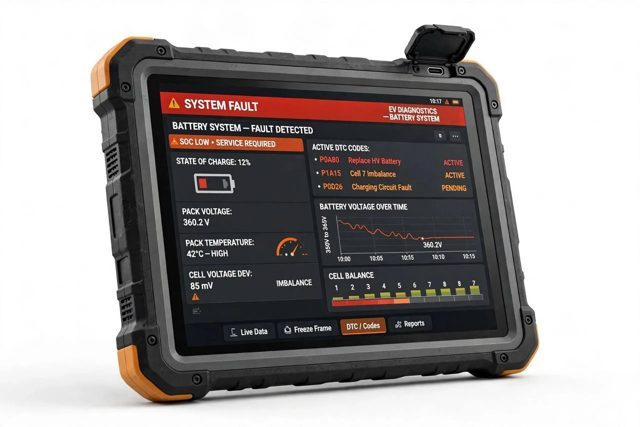
Professional diagnostic equipment can help technicians read stored fault codes, identify affected vehicle systems, review relevant battery information, assess electrical and charging systems, identify faults that may not be immediately visible and recommend appropriate repairs.
Where possible, choose a technician with experience in your vehicle's make, model and technology.
Final thoughts
Dashboard warning lights are your vehicle's way of communicating that something needs attention. Understanding what they mean, recognising urgent alerts and responding appropriately can help protect you, your vehicle and your investment.
You don't need to understand every technical detail of your EV or hybrid, but you should know when to stop, when to investigate and when to seek professional help.