
A simple EV & hybrid maintenance checklist
What to check yourself each month, and what to have checked at a service centre.
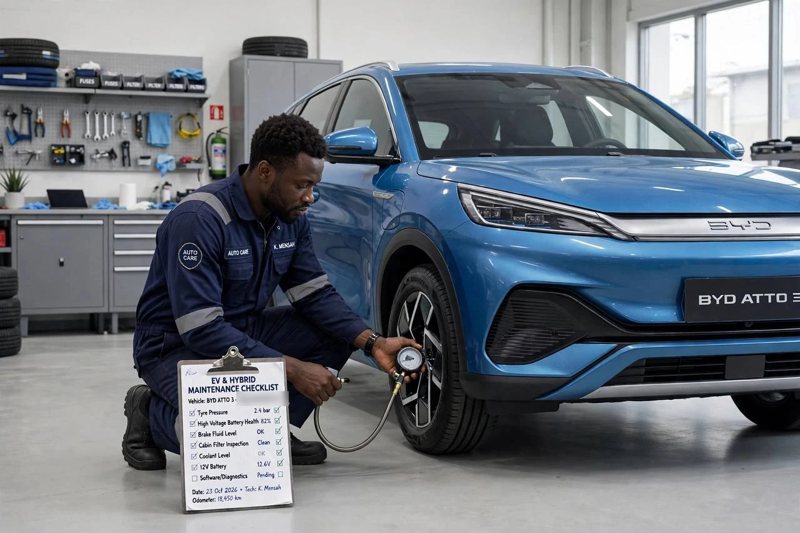
One of the biggest advantages of owning an electric vehicle is that it generally has fewer moving mechanical components than a conventional petrol vehicle.
However, that doesn't mean EVs and hybrids are maintenance-free.
Your vehicle still relies on tyres, brakes, suspension, cooling systems, electrical components and other essential parts that need regular attention. For hybrid owners, there are also combustion-engine components that require routine servicing.
Understanding what to check and when to seek professional assistance can help prevent unexpected breakdowns, improve safety and protect your investment.
Here is a simple maintenance guide for EV and hybrid owners.
1. Check your tyres regularly
Tyres are among the most important safety components of any vehicle. EVs can be particularly demanding on tyres because of their battery weight and the instant torque delivered by electric motors.
Make it a habit to check:
- Tyre pressure against the manufacturer's recommended specifications.
- Uneven tyre wear.
- Cuts, cracks or visible damage.
- Tread depth.
- Wheel alignment and balancing when necessary.
Underinflated tyres can increase energy consumption, reduce driving range and affect handling.
Do not forget to check your spare tyre if your vehicle has one.
2. Inspect your braking system
Electric vehicles use regenerative braking to recover some energy when slowing down. This can reduce the frequency of conventional brake use, but it does not eliminate the need for brake maintenance.
Your braking system should be checked for:
- Brake pad and disc condition.
- Brake fluid level and condition.
- Unusual noises when braking.
- Vibrations or pulling during braking.
- Brake warning lights.
- Parking brake operation.
Because regenerative braking can mean conventional brakes are used less frequently, corrosion or uneven brake wear may sometimes develop. Have your braking system inspected at the intervals recommended by your manufacturer.
3. Monitor your battery and electrical systems
Your vehicle's battery and electrical systems should be monitored regularly. Watch out for:
- Unusual changes in driving range.
- Battery-related dashboard warnings.
- Unexpected charging interruptions.
- Electrical system malfunctions.
- Unusual battery temperature alerts.
- Problems with the 12V auxiliary battery.
If a warning persists, arrange a professional diagnostic inspection.
Never attempt to repair high-voltage wiring or battery components yourself.
4. Keep the cooling system in good condition
EVs and hybrids use specialised cooling systems to regulate the temperature of important components. Depending on the vehicle, these may include the high-voltage battery, electric motor, power electronics and combustion engine.
During servicing, ask your technician to check:
- Coolant levels and condition.
- Cooling system hoses and connections.
- Signs of leakage.
- Cooling fans and related components.
- Battery thermal management performance.
Always use the coolant specification recommended by the manufacturer. Different vehicles may require different coolant types.
Never open a pressurised cooling system while it is hot.
5. Don't ignore suspension and steering
Ghana's road conditions can expose vehicles to potholes, uneven surfaces and other challenges. Over time, these conditions can affect suspension and steering components.
Have the following inspected when necessary:
- Shock absorbers and struts.
- Suspension bushes.
- Ball joints.
- Steering components.
- Wheel bearings.
- Wheel alignment.
Pay attention to unusual knocking sounds, vibrations, uneven tyre wear or changes in vehicle handling. Addressing these issues early can prevent more expensive repairs.
6. Remember that hybrids still need engine servicing
Hybrid vehicles combine an electric motor with a conventional combustion engine. Even when the vehicle spends much of its time operating electrically, the petrol engine still requires appropriate maintenance.
Depending on the manufacturer's schedule, this may include:
- Engine oil and oil filter replacement.
- Air filter inspection or replacement.
- Spark plug inspection or replacement.
- Engine coolant checks.
- Fuel system inspection.
- Drive belt inspection, where applicable.
- Exhaust system checks.
Some hybrid engines operate differently from conventional engines, so servicing should follow the specific manufacturer's recommendations.
Do not assume that reduced engine usage means engine servicing is unnecessary.
7. Check other important components
Some maintenance requirements apply to both EVs and hybrids.
Cabin air filter: Helps maintain clean airflow inside the vehicle.
Windscreen wipers: Ensure clear visibility, especially during rainy conditions.
Lights: Check headlights, brake lights, indicators and other exterior lighting.
Air conditioning: Monitor cooling performance and arrange inspections when necessary.
12V battery: Check its condition and charging performance.
Doors and seals: Inspect for damage, unusual wear or water entry.
Software and vehicle updates: Follow manufacturer guidance for relevant software updates and system checks.
8. Understand your dashboard warning lights
Your dashboard is one of the most important sources of information about your vehicle's condition.
Pay attention to warning messages relating to:
- High-voltage battery systems.
- Brake systems.
- Electric motor or powertrain.
- Cooling systems.
- Tyre pressure.
- 12V electrical systems.
- Charging systems.
Some alerts indicate routine attention is needed, while others require you to stop driving immediately. Always consult your owner's manual for the meaning of a specific warning.
If a red warning, STOP message or serious battery, braking or overheating alert appears, follow the vehicle's instructions and stop in a safe location when directed.
9. Know when to visit a professional service centre
Some checks can be carried out by the owner, but others require specialised equipment and technical expertise.
Visit a qualified EV or hybrid service centre if you experience:
- Persistent dashboard warning lights.
- Unusual battery performance.
- Charging problems.
- Brake or steering abnormalities.
- Coolant leaks.
- Unusual noises or vibrations.
- Reduced vehicle performance.
- Repeated 12V battery failures.
Where possible, use technicians familiar with your vehicle's make, model and electrical architecture.
High-voltage battery repairs, isolation procedures and electrical system work should only be handled by appropriately trained and equipped professionals.
10. Your monthly EV & hybrid maintenance checklist
Every month
- Check tyre pressure and visible tyre condition.
- Inspect lights and indicators.
- Check windscreen wipers.
- Monitor battery warnings and energy consumption.
- Check for visible fluid leaks.
- Observe brake performance.
- Listen for unusual noises.
- Check the charging port and accessible charging cable for visible damage.
- Review your vehicle's service reminders.
During scheduled servicing
- Inspect the braking system.
- Check suspension and steering components.
- Inspect cooling systems.
- Assess the 12V battery.
- Review relevant vehicle diagnostic information.
- Check filters and fluids according to the manufacturer's schedule.
- Review software updates and outstanding maintenance requirements.
For hybrid vehicles
- Include combustion-engine servicing.
- Inspect engine oil and filters.
- Check the engine cooling system.
- Follow the manufacturer's fuel and ignition system maintenance schedule.
Final thoughts
Maintaining an EV or hybrid doesn't have to be complicated.
The most important things are consistency, understanding your vehicle's requirements and knowing when professional attention is needed.
A simple monthly inspection, combined with manufacturer-recommended servicing, can help you identify problems early, improve safety and maintain your vehicle's performance.
As Ghana's EV and hybrid market continues to develop, access to knowledgeable technicians and reliable maintenance support will become increasingly important.
NexaFix is working to connect vehicle owners with the service centres, technical expertise, resources and support they need throughout their ownership journey.