
What affects EV range in everyday driving?
Why the range on your screen changes, and how to get more from every charge.
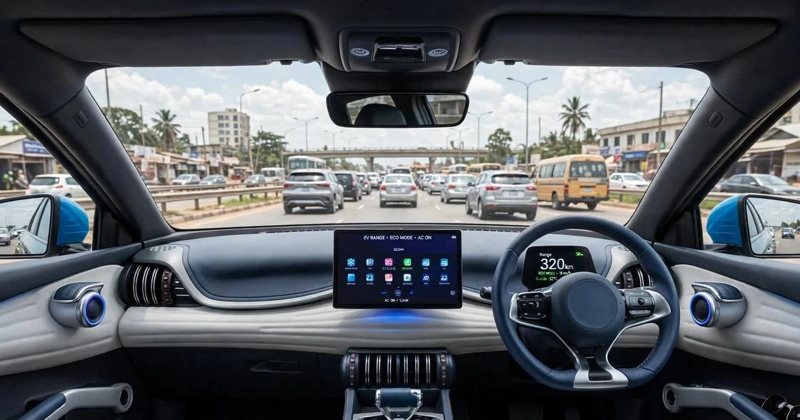
One of the first things people notice when driving an electric vehicle is the estimated range displayed on the dashboard.
You might charge your vehicle to 100% and see one estimated distance, only to notice that the figure changes after driving for a while.
Does this mean your battery is losing capacity? Is something wrong with your vehicle? Or is the range simply responding to your driving conditions?
In most cases, changes in estimated driving range are a normal part of electric vehicle operation.
Understanding what affects range can help you plan journeys better, use energy more efficiently and get greater confidence from every charge.
1. What is EV driving range?
Driving range is the estimated distance an electric vehicle can travel using the energy available in its battery. It is commonly displayed in kilometres or miles.
Different EVs offer different ranges depending on battery capacity, electric motor efficiency, vehicle weight and design, aerodynamics, software and energy management systems.
However, the advertised range is usually measured under standardised testing conditions. Your actual everyday range may be different because real-world driving conditions are constantly changing.
2. Your driving style
How you drive has a direct effect on how quickly your vehicle uses battery energy.
Rapid acceleration: accelerating aggressively requires more power from the battery.
High-speed driving: driving at higher speeds generally increases aerodynamic resistance, requiring more energy.
Frequent hard braking: heavy braking can waste energy that might otherwise be recovered through regenerative braking.
Smooth driving: gradual acceleration and anticipating traffic conditions can help reduce unnecessary energy consumption.
A consistent, controlled driving style can improve efficiency and make your available range go further.
3. Air conditioning and other electrical systems
Air conditioning is particularly relevant in warm climates such as Ghana.
Unlike conventional vehicles, where the engine can supply energy for some auxiliary systems, EVs generally draw energy for climate control and other electrical functions from the battery.
Energy-consuming systems may include:
- Air conditioning.
- Cabin heating, where fitted.
- Battery thermal management.
- Infotainment systems.
- Lighting.
- Other electrical accessories.
Using air conditioning does not mean you should avoid it. Passenger comfort and safe driving matter. However, understanding that climate control uses battery energy helps explain why your estimated range may change when these systems are active.
4. Traffic and road conditions
Traffic can affect EV efficiency in different ways. In stop-and-go traffic, regenerative braking can recover some energy when the vehicle slows down. However, frequent acceleration, prolonged use of climate control and extended periods of driving can still consume energy.
Road conditions also matter. Driving uphill requires additional energy, while downhill driving may allow the vehicle to recover some energy through regenerative braking.
Poor road surfaces, rough terrain and frequent changes in speed can also influence overall efficiency.
For drivers in Ghana, journeys involving congested urban roads, uneven surfaces and hilly routes may produce different energy consumption patterns.
5. Tyre pressure and vehicle condition
Your tyres play an important role in how efficiently your EV moves. Underinflated tyres increase rolling resistance, meaning the vehicle requires more energy to travel the same distance.
Other factors that can influence efficiency include:
- Incorrect wheel alignment.
- Tyre condition and type.
- Excessive vehicle load.
- Poorly maintained braking components.
- Mechanical resistance from damaged components.
Check tyre pressure regularly and follow the manufacturer's recommended specifications. A well-maintained vehicle is not only more efficient but also safer to drive.
6. Battery temperature and weather conditions
EV batteries operate within a preferred temperature range. When battery temperatures are too high or too low, the vehicle's battery management system may adjust charging, discharging and thermal management to protect the battery. This can affect available power, charging speed and driving efficiency.
In colder climates, battery heating and reduced battery performance can have a noticeable effect on range.
In Ghana's generally warm climate, extreme cold is less likely to be a routine concern, but high temperatures can still increase the importance of effective battery cooling and thermal management.
Always keep the battery cooling system in good condition and follow your vehicle manufacturer's recommendations.
7. Why does your estimated range keep changing?
Your dashboard's estimated range is not simply a fixed measurement of battery capacity. Many EVs calculate estimated range using information such as:
- Current battery charge level.
- Recent energy consumption.
- Driving history.
- Vehicle operating conditions.
- Climate control usage.
- Battery temperature.
If you have recently been driving at high speeds, your vehicle may estimate a shorter remaining range because it expects similar energy consumption to continue. If you switch to more efficient driving, the estimated range may gradually improve.
This does not necessarily mean the battery has gained or lost capacity. It means the vehicle is adjusting its estimate based on expected energy consumption.
8. How to get more range from every charge
Here are some practical habits that can help improve everyday EV efficiency.
- Drive smoothly. Avoid unnecessary rapid acceleration and hard braking.
- Maintain appropriate tyre pressure. Check your tyres regularly and use the recommended pressure.
- Plan your journeys. Combine nearby errands where practical and avoid unnecessary detours.
- Use regenerative braking effectively. Understand your vehicle's regenerative braking settings and use them appropriately.
- Manage climate control sensibly. Use air conditioning at comfortable settings rather than switching it off when it is needed for safe and comfortable driving.
- Avoid unnecessary weight. Remove heavy items that you do not need to carry.
- Monitor energy consumption. Pay attention to your vehicle's energy-use information and identify habits that increase consumption.
- Maintain your vehicle. Keep tyres, brakes, cooling systems and other relevant components in good condition.
9. How should you plan your journey around range?
Good range management is about planning, not constantly worrying about your battery percentage.
Before a longer journey:
- Check your current battery level.
- Review the estimated distance to your destination.
- Consider road conditions and expected traffic.
- Identify compatible charging stations along your route.
- Account for possible detours.
- Allow a reasonable battery reserve.
- Have an alternative charging option where possible.
Avoid relying entirely on the dashboard's estimated range when planning a journey. Your vehicle's estimate is helpful, but actual energy consumption can change during the trip.
10. Does reduced range mean your battery is damaged?
Not necessarily. A shorter estimated range can result from driving conditions, climate control usage, tyre pressure, battery temperature or recent energy consumption.
However, if you notice a persistent and unexplained reduction in range, it may be worth investigating.
A qualified EV technician can assess:
- Battery state of health.
- Battery management system information.
- Battery temperature and cooling performance.
- Charging behaviour.
- Vehicle diagnostic fault codes.
- Unusual energy consumption.
Do not assume that a change in dashboard range automatically means the battery needs replacing. A proper assessment is the best way to understand what is happening.
Final thoughts
EV range is influenced by more than battery size alone.
Your driving style, road conditions, air conditioning, tyre pressure, vehicle condition and battery temperature all play a role in determining how far you can travel on a charge.
Once you understand these factors, you can manage your vehicle more confidently, plan journeys more effectively and make better use of available charging infrastructure.
As electric mobility continues to grow in Ghana, access to reliable charging information, technical expertise and vehicle support will become increasingly important.
NexaFix is connecting EV owners with the resources, charging options, service providers and expertise needed to make electric vehicle ownership easier and more rewarding.